Akagera Night Safari
Night safaris in Akagera National Park run from 17:30 to 20:30 in both the south and north sectors, exclusively for overnight guests, who are picked up and dropped off directly at their lodge. Each sector operates two open safari vehicles fitted with spotlights that illuminate up to 60m, seating up to 7 guests per car. In the south, pricing is $40 per adult and $25 for children ages 6–12, with children 5 and under going free. In the north, it's $50 per adult and $35 for children ages 7–12, with no option available for children under 7.
| Detail | South | North |
|---|---|---|
| Departure | 17:30 daily | 17:30 daily |
| Return | By 20:00 | By 20:00 |
| Duration | Approx. 2.5 hours | Approx. 2.5 hours |
| Vehicle | Open 4x4 - max 7 guests - driver & guide included | Open 4x4 - max 7 guests - driver & guide included |
| Pick-up | Ruzizi tented lodge & akagera Game Lodge (Salt of Akagera) | At Karenge Bush Camp |
| Price (adult) | $40 per person | $50 per person |
| Price (child 7-12) | $25 per person | $35 per person |
| Seats available | Max 14 | Max 14 (2 vehicles) |
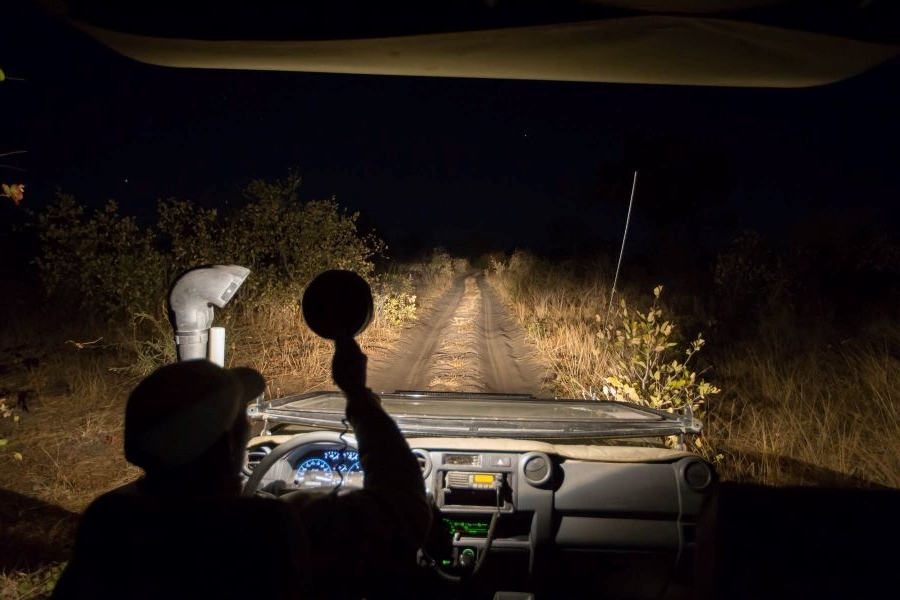
The safari in the north and the south share a start time, a spotlight, and an open 4x4. Everything else is different.
South or North Night Safari — Know The Difference Before You Book
The southern night safari
The southern night safari is available to guests staying at Akagera Game Lodge which was recently rebranded as Salt of Akagera and Ruzizi Tented Lodge. You set off at sunset, when the sky turns gold, pink, and deep blue all at once, like driving straight into a postcard. Once darkness falls, the night light spotlight takes over.
The south's dense shrubs and woodland press in on both sides of the track, cutting visibility and giving the big predators plenty of cover to stay hidden. Most leopard sightings happen right here, in these southern woodlands, home to somewhere between 15 to 20 leopards and the park's still working out the exact number as of June 2026.
A night safari does improve your odds, but don't expect a sure thing: leopards are nocturnal and notoriously elusive, and they like to drag their kill up a tree, right into the same thick cover that makes them so hard to spot in the first place.
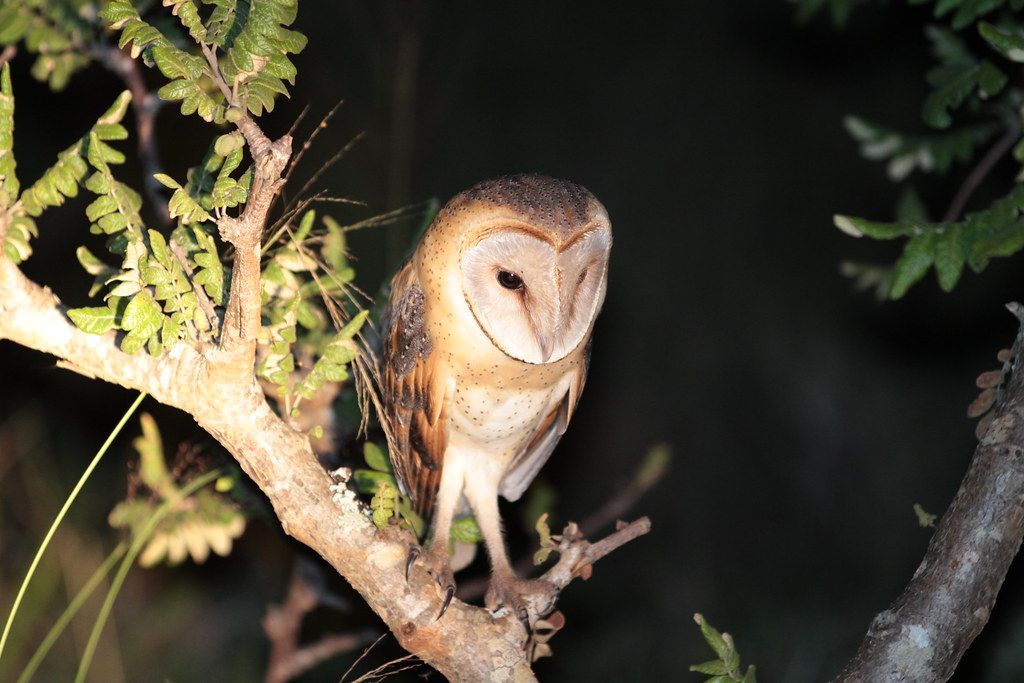
On most nights, you'll see the smaller creatures that come alive after dark:
- Bush babies, whose eyes catch the spotlight before you spot the animal itself
- Civets moving low through the grass, slender spotted genets darting across the track.
- Spotted hyenas patrol the shrubland edges
- Impalas, elands, and topis rest roadside, undisturbed by the vehicle.
The northern night safari
The northern night safari is a different experience entirely. Karenge Bush Camp sits on the open savannah of the Kilala Plains. There are no lakes, no boat rides, no alternatives. The night safari is what the north offers after dark and does it best and is arguably one of the best optional activities in Akagera National Park.
Where the south has shrubs and woodland, the north has open plains with unobstructed views in every direction. The spotlight reaches 60 metres into nothing but grass and sky. There’s nowhere for an animal to hide and nowhere for you to look except straight at whatever the light finds.
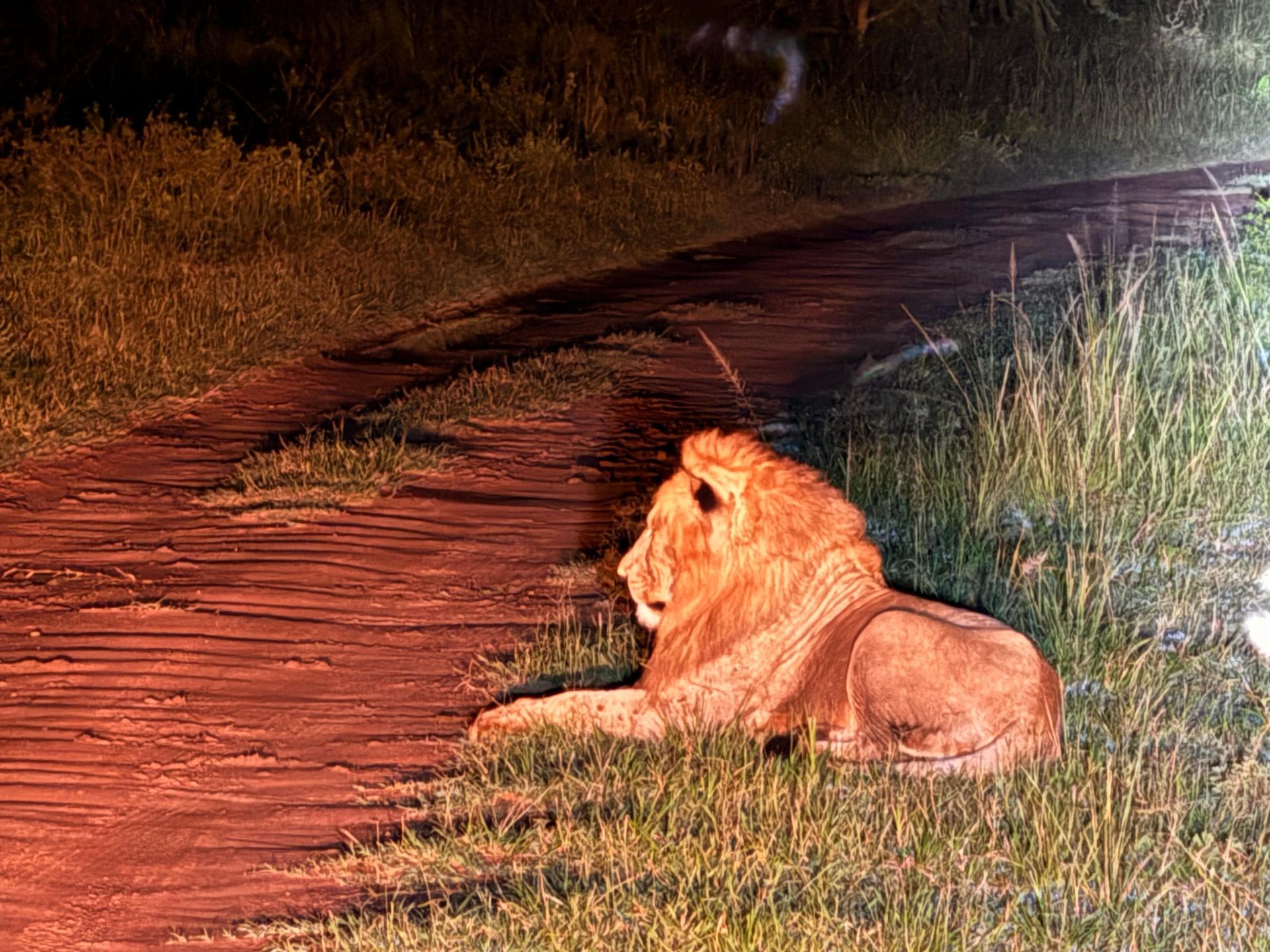
Your chances of a Big 5 sighting on the northern night safari are genuinely higher than during a daytime game drive in the south. The predators are out on a hunt, the plains are open which makes it easier for the spotlight to find them.
Night safari seats are limited — book in advance
There are only two safari vehicles per sector, seating seven people each. In the north, Karenge Bush Camp has five tents, so at full occupancy you've got 20 guests all chasing 14 seats. During the June through September, the camp fills up, and the night safari fills up right along with it. Book it when you book your room, not after you've landed.
The south is worse. Akagera Game Lodge alone has 42 rooms, which means up to 84 guests, and Ruzizi Tented Lodge adds another 12 on top of that. Call it nearly 100 people all trying to squeeze into 14 seats.
What to bring
The temperature drops quickly once the sun goes down, particularly on the open plains in the north.
- Fleece or light jacket
- Long trousers
- Closed shoes
- Camera (see photography note above)
- Binoculars
- Insect repellent
Included in these tours
The night safari is part of
Includes the southern night drive from Akagera Game Lodge or Ruzizi Tented Lodge.
Includes the northern night drive from Karenge Bush Camp on the Kilala Plains.
* The night safari operates in the southern section (Akagera Game Lodge, Ruzizi Tented Lodge) and at Karenge Bush Camp in the north. It is not available to day visitors.
* Pickup and drop-off is at your accommodation. The vehicle does not travel to the park entrance to collect guests.
* In high season (June–September) seats sell out fast, early booking is advised.



